


I trained in medicine for more than a decade with the intention of becoming an oncologist. Cancer in my family pulled me toward GI oncology, and I spent years in GI oncology clinics studying pancreatic cancer: a disease that moves fast, is usually found late, and has tended to buy time in months.
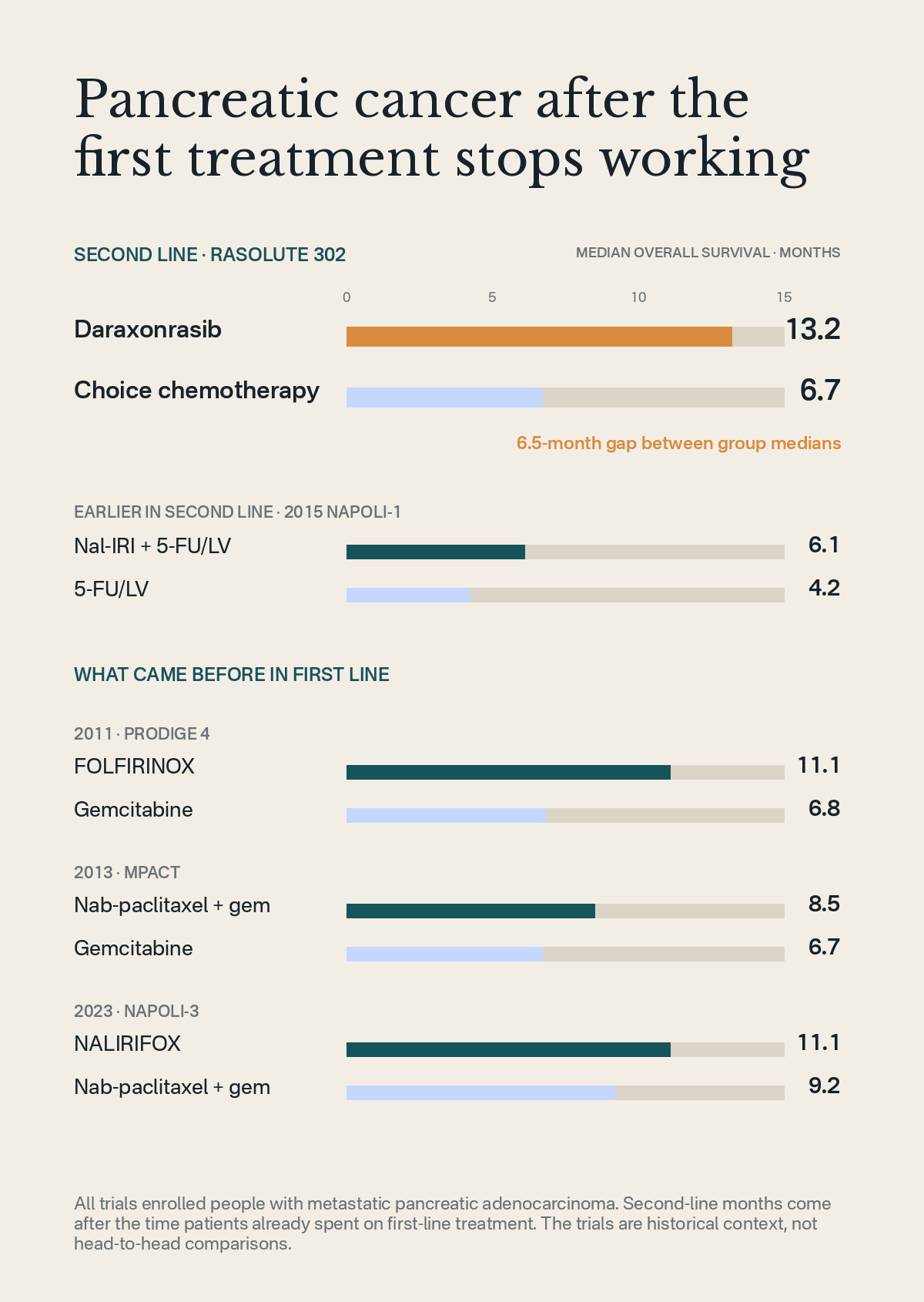
That is why daraxonrasib matters. In the randomized RASolute 302 trial, among people whose metastatic pancreatic cancer had progressed after one prior treatment, median survival was 13.2 months, compared with 6.7 months on physician-selected chemotherapy.
Then came the price: $39,800 every 30 days—$477,600 for twelve fills at list price.
That means a manufacturer has placed a public starting number on a drug for a disease in which patients and payers have little room to walk away.
Today I'm a longevity physician and the founder and CEO of Curator, but I still think about cancer through the questions that first drew me to oncology: What helps a patient live longer? And what stands between evidence and access? This issue is an attempt at the second question.
13.2 months
Median survival with daraxonrasib after prior treatment.
6.7 months
Median survival with physician-selected chemotherapy.
$39,800
List price per 30 days; the negotiated net price is private.
When the first treatment stops working
Patrick Swayze—the dancer and actor millions knew from Dirty Dancing and Ghost—was diagnosed with pancreatic cancer in January 2008. By the time doctors found it, it had already spread to his liver. He kept working through chemotherapy and lived 20 months after diagnosis.
His 20 months was too little time, and yet, especially for the era, he survived far longer than average.
When Swayze was diagnosed, gemcitabine was still the backbone of treatment, and median survival was about seven months for similar cases.
Treatment has improved since then. Combination chemotherapy began to give patients more time.
In 2011, FOLFIRINOX reached 11.1 months, compared with 6.8 months for gemcitabine. In 2013, nab-paclitaxel plus gemcitabine reached 8.5 months, compared with 6.7 months. In 2023, NALIRIFOX reached 11.1 months, compared with 9.2 months for nab-paclitaxel plus gemcitabine.
Those were first-line trials: the first systemic treatment for metastatic disease. But what could we offer once that treatment stopped working? That next step is called second line.
In NAPOLI-1, which enrolled patients after their cancer had progressed on gemcitabine-based treatment, median survival measured from randomization was 6.1 months with liposomal irinotecan plus 5-FU and leucovorin, compared with 4.2 months with 5-FU and leucovorin alone. The treatment did not add 6.1 months; the difference between the two medians was 1.9 months.
Then came daraxonrasib. Everyone in RASolute 302 had metastatic pancreatic cancer that had worsened after one prior systemic treatment.
Median survival measured from randomization was 13.2 months with daraxonrasib and 6.7 months with chemotherapy chosen by the treating physician. That 6.5-month gap is a difference between group medians, not a promise that any one patient will gain 6.5 months.
A public price, then a private one
When Rasonque (brand name for daraxonrasib) reached the market, Revolution Medicines put a price on it: $39,800 for a 30-day supply.
Twelve fills add up to $477,600. That is the number in the headline. But it is not a yearly bill that every patient or insurer will pay. It is the wholesale acquisition cost: the manufacturer's public starting price.
Most patients did not stay on the drug for a full year. The median treatment duration was 6.2 months, and median progression-free survival was 7.2 months.
At list price, 6.2 months of daraxonrasib would cost roughly $246,760. But even that figure leaves out rebates, monitoring, side-effect care, chemotherapy costs avoided, and treatment that came later.
Drug pricing gets confusing because we use the word price for three different things:
- The list price: $39,800 per 30 days, set by the manufacturer.
- The net price: what the plan ultimately pays after confidential rebates and discounts.
- The patient price: what one person pays under a specific insurance plan. For example, if covered under Part D, Medicare caps annual out-of-pocket drug spending at $2,100 in 2026.